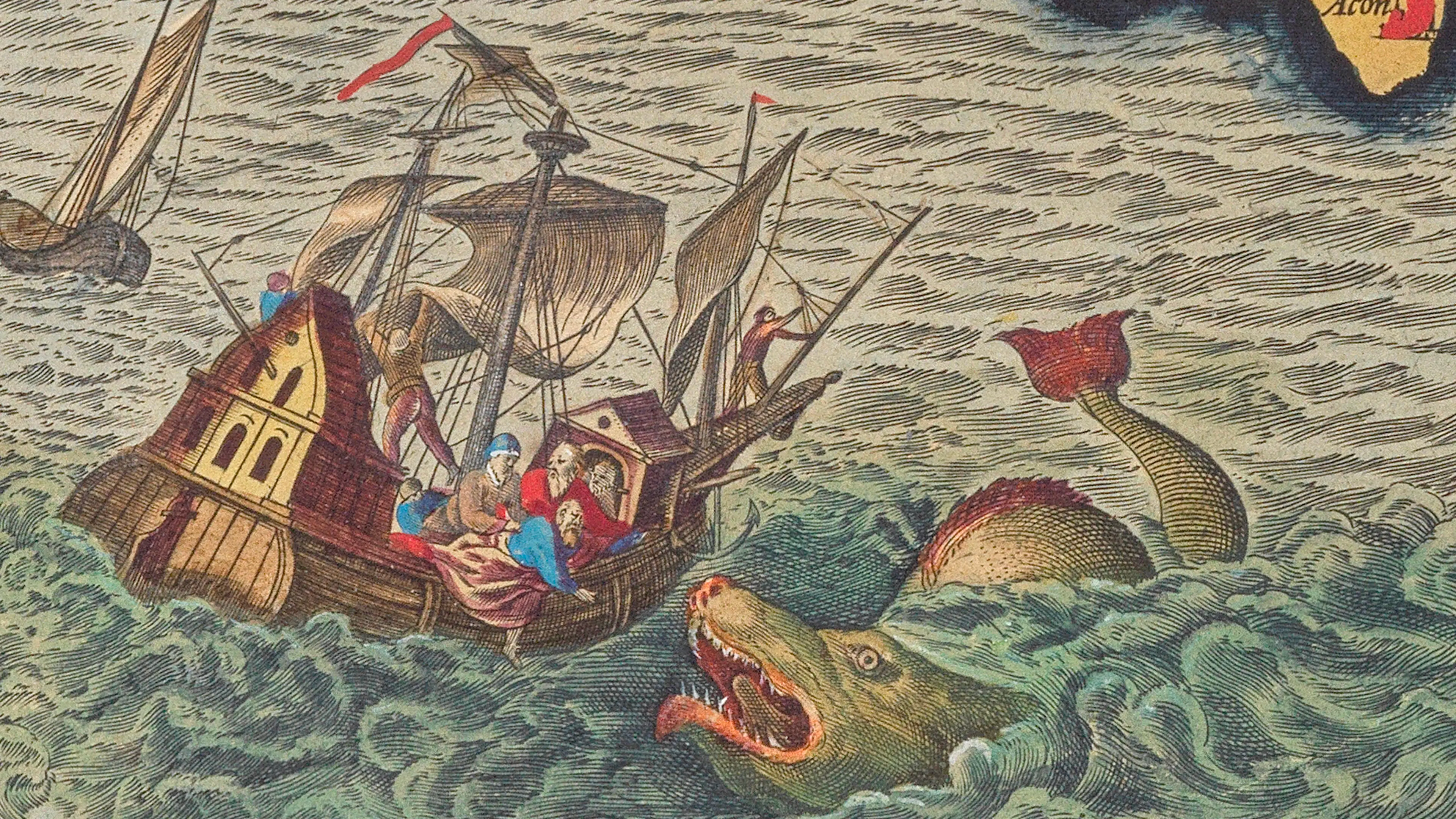
Sea monsters test
In the future you will be able to find sea monsters here. Want to know when? Subscribe for our newsletter.
I want to know when the sea monsters arrive.
Fabrique and Q42 wanted to shake up expectations of what a website can be. They produced the beautiful floating spheres area instead of a regular home page, for example, and put the contents of the usual website footer in the about sphere. The idea was to remove distractions, and really place the visitor ‘inside’ a digital space.
image caption
Ptolemaic
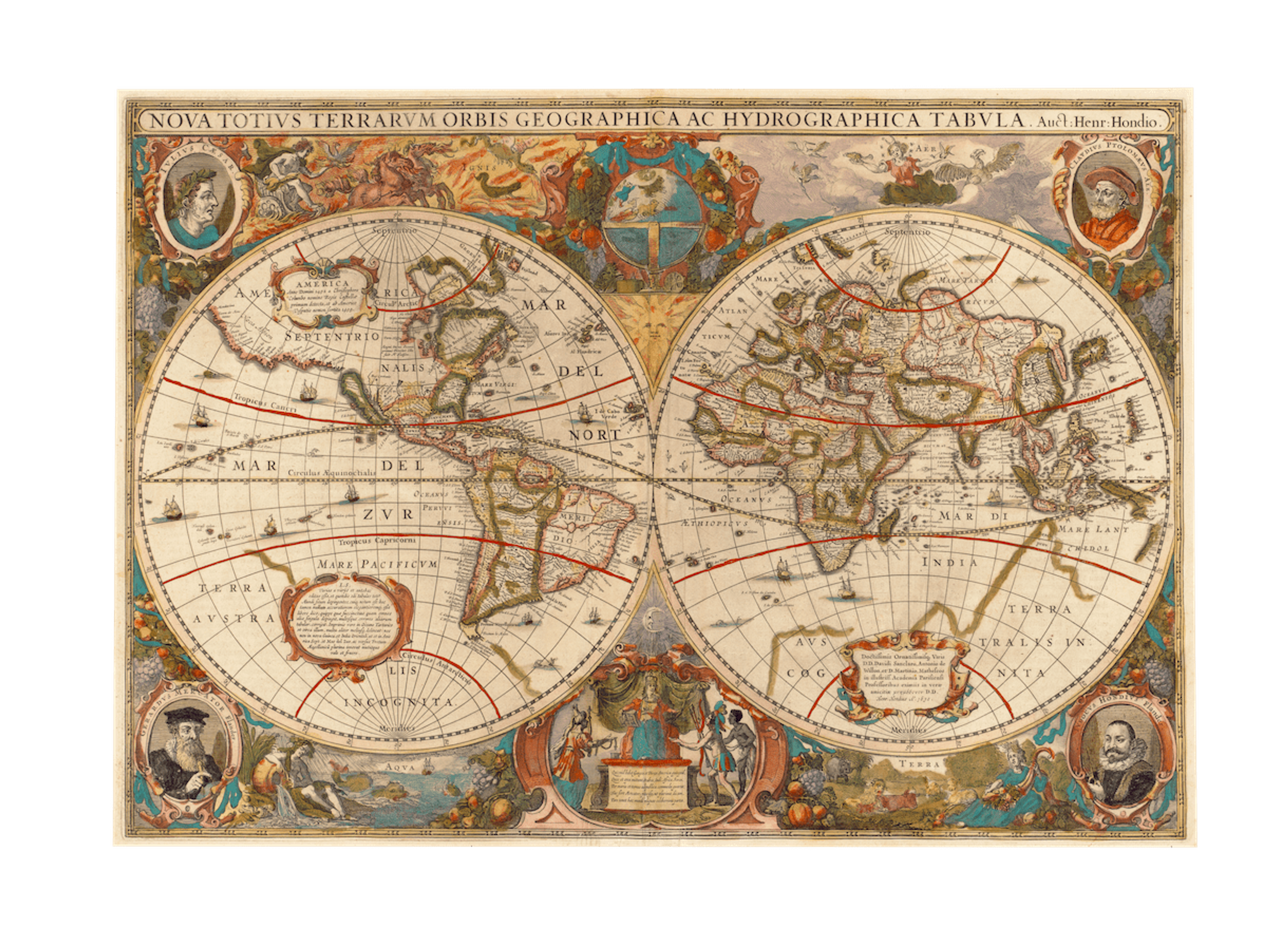
Named after Claudius Ptolemy, this projection was described in his ancient text the Geographia (c. 150 CE), and given form by the philosopher, Agathodaemon of Alexandria. The maps using Ptolemy’sprojection were the first to include lines of latitude. They present the ‘known world’ made up of three continents: Asia, Africa, and Europe.There are two variations of the Ptolemaic projection.
Ptolemaic
Named after Claudius Ptolemy, this projection was described in his ancient text the Geographia (c. 150 CE), and given form by the philosopher, Agathodaemon of Alexandria. The maps using Ptolemy’sprojection were the first to include lines of latitude. They present the ‘known world’ made up of three continents: Asia, Africa, and Europe.There are two variations of the Ptolemaic projection.
Azimuthal projections are typically maps centred on the North and South Poles. Polar maps are usually disks with central points. The lines of latitude appear as concentric circles, equally distanced from one another, whilst the lines of latitude diverge at an angle. An azimuthal projection is useful as it provides the reader with a sense of the Earth’s spherical shape. Landmasses towards the edge of the map become more oblique, suggesting the curve of the globe.
This projection was most likely invented by the Persian mathematician al-Biruni in the 11th century. However, in Europe is it often known as the Postel projection, after the mapmaker Guillaume Postel, who used it in 1581. The azimuthal projection comes in a variety of types.
Named after Claudius Ptolemy, this projection was described in his ancient text the Geographia (c. 150 CE), and given form by the philosopher, Agathodaemon of Alexandria. The maps using Ptolemy’sprojection were the first to include lines of latitude. They present the ‘known world’ made up of three continents: Asia, Africa, and Europe.There are two variations of the Ptolemaic projection.
subtitle
title
The most important development in the print production of atlases and other books was the invention of the printing press and movable type in about 1450, by the German goldsmith . It revolutionised the technology of woodcut printing, making the manufacture of books and prints quicker and easier. A huge increase in book production occurred, so they were no longer only enjoyed by the social elite.
title 2
The most important development in the print production of atlases and other books was the invention of the printing press and movable type in about 1450, by the It revolutionised the technology of woodcut printing, making the manufacture of books and prints quicker and easier. A huge increase in book production occurred, so they were no longer only enjoyed by the social elite.